Here's a course that I am teaching for the HP Catalyst Academy--it's called "The Sound of Science"
It's interesting
It's free
You can register here.
This mini-course explores the educational possibilities of digital audio creation in physical and life sciences. Digital audio is a powerful and growing medium inside and outside of education, and participants will learn how to use it to communicate complex topics, capture field experiences, enhance visual inspections, and augment real or hypothetical locations — all with common hardware and free software. Explore ways to edit, mix, use, and teach with accessible audio editing technologies. Four projects within the mini-course will build upon educators’ technical, creative, legal, and ethical knowledge and skills.
Friday, November 15, 2013

Wednesday, November 06, 2013
From Blocks to the Boardroom: A Systems Approach to Educational Technology
Why does technology often seem underused in classrooms?
What's the best framework for using technology in educational setting?

What can systems thinking teach us about the use of educational technology?
How can technology be used effectively in a class with a wide range of learners?
When you drop a new species into an environment, why does it often die or wreak havoc on the host ecosystem?
The last question may seem out of place, but I believe it offers a key to why technology often underperforms in educational settings. By 'underperform' I mean it does not match our experiences with this technology outside of schools, such as with an iPad, or it just seemed so much better on the showroom floor.
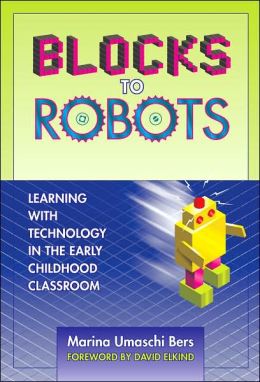
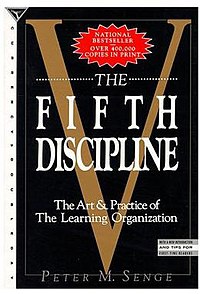
 These are the questions I plan to investigate in Using Integrated Software in Spring 2014. I've found some interesting research--from technology in early childhood education in Bers' From Blocks to Robots to Senge's Fifth Discipline. We'll also explore Universal Design for Learning, Khan Academy, and flipped classrooms in between. Our focus will be on the environmental factors that enable successful uses of technology--a systems approach.
The course will be a combination of short research papers and hands-on technology projects.
What's the best framework for using technology in educational setting?
What can systems thinking teach us about the use of educational technology?
How can technology be used effectively in a class with a wide range of learners?
When you drop a new species into an environment, why does it often die or wreak havoc on the host ecosystem?
The last question may seem out of place, but I believe it offers a key to why technology often underperforms in educational settings. By 'underperform' I mean it does not match our experiences with this technology outside of schools, such as with an iPad, or it just seemed so much better on the showroom floor.
 These are the questions I plan to investigate in Using Integrated Software in Spring 2014. I've found some interesting research--from technology in early childhood education in Bers' From Blocks to Robots to Senge's Fifth Discipline. We'll also explore Universal Design for Learning, Khan Academy, and flipped classrooms in between. Our focus will be on the environmental factors that enable successful uses of technology--a systems approach.
The course will be a combination of short research papers and hands-on technology projects.
Monday, October 14, 2013
Maker Movement
I've been introducing the concept of makerspaces to different students and people (as well as being a participant observer at a fewmakerspaces). It connects and extends my work in DIY media, and I've found it to be a lot of fun for me and my kids.
 |
| Enjoying Soldering at Hoboken Makerbar |
The Makerspace movement is a relatively grassroots phenomenon in which people meet to explore a variety of DIY Projects. These can include sewing, microcomputers (Arduinos and Raspberry Pis), 3D Printing, video making, toy making, welding, etc. Though microcomputing and 3D printing are common activities, the maker movement is characterized by a variety of digital, mechanical, and craft activities. Here are some helpful links.
Seven Things You Should Know about MakerSpaces
https://net.educause.edu/ir/library/pdf/ELI7095.pdf
How Making Stuff Makes Science More Appealing to Kids from PBS News Hour
https://www.youtube.com/watch?v=dvWv48nhUR0
Watch Kickstarter video for Maker http://www.kickstarter.com/projects/379201360/maker-a-documentary-on-the-maker-movement
Make it @ Your Library from School Library Journal
http://www.slj.com/2013/10/programs/make-it-your-library-launches-maker-space-project-website/#_
ReMaking Education: Designing Classroom Makerspaces for Transformative Learning from Edutopia Magazine http://www.edutopia.org/blog/classroom-makerspaces-transformative-learning-stephanie-west-puckett
Monday, July 22, 2013
Shakespeare for Everyone: Working with Students with Severe Disabilities
This is some work I'm doing at a school for students with multiple disabilities.
This was originally posted on the Folger Shakespeare Library's Making a Scene Blog in July 11, 2013 and reposted here.
This was originally posted on the Folger Shakespeare Library's Making a Scene Blog in July 11, 2013 and reposted here.
Shakespeare can be a powerful tool for the cognitive, emotional, social, and linguistic development of all kids.
I saw this phenomenon when working with the students of A. Harry Moore School in Jersey City, a comprehensive school for students ages 3-21 with severe medical, physical, and cognitive disabilities. This year a group of 14 students did a variety of production-based activities with Shakespeare, culminating in a performance of The Winter’s Tale in June.

Students take a bow after performing The Winter’s Tale.
A production-based approach is where kids come to understand Shakespeare through performance and technology—using Shakespeare’s Language. It’s based in the Folger Teaching Method, and it’s great for all kids for several reasons.
1) It is a deeply immersive experience. In this case, students were dancing, sheering sheep, getting pursued by bears, consulting oracles, and coming to life from marble statues. They were engaged like they would be in a fun game or an exciting sport.
2) These are fault tolerant activities. You do not have to do it perfect or right to make it work well.
3) There is a wide zone of engagement. It’s been said that engagement occurs when there’s a balance between skills and challenge. If a person is over-skilled, then boredom sets in. If a person is over-challenged, then frustration sets in. A teacher can easily balance skills and challenges with a production-based approach.
4) It’s a great tool for building students’ executive function. Executive function is a relatively new and helpful way of looking at brain activity. It’s a combination of planning, working memory, multiple perspectives, and impulse control. The methods of a production-based approach develop executive function.
Here are a few of the activities that worked for us.
Shadows
One of the activities we used was “Shadows,” a method for students to get familiar with the physical space of the theater, experiment with their range of motion, and understand the contrasting emotions of the main character of The Winter’s Tale, and the catalyst for the action of the play, Leontes. In “Shadows,” one student acts as “Good” Leontes and another student follows as his “Shadow,” enacting contrasting lines from “Good” Leontes. Leontes wore a white mask or hat, and Leontes’ shadow followed wearing a black mask or hat.
| Leontes | Leontes’ Shadow |
| Stay your thanks a whileWell said, Hermione | Too hot, too hotI am angling now |
Seven-Minute Version
To better understand the plot and the language in the play, the students frequently performed “Winta: The Seven-Minute Winter’s Tale”. Every student enacted at least one line as a teacher read the narration and cued the students. The lines were designed for both readers and nonreaders, who would say their lines with a prompter.
e.g.
NARRATOR: Leontes is sorry (12). But it’s too late. His wife is dead and his baby is gone. Antigonus has taken Perdita to Bohemia and leaves her in an abandoned place (13).
Student lines:
12) I have deserved all tongues to talk their bitterest.
13) There weep and leave it crying; and, for the babe is counted lost forever, Perdita.
Emotion Chart

Chart with different degrees of emotions
A frequent reference during many of these activities, rehearsals, and performance was the emotion chart. It offered visual cues for nonreaders and some subtle emotional distinctions for the more dramatic players. It was based on the work of Christine Porter in Mary Ellen Dakin’s Reading Shakespeare with Young Adults.

Three students smiling after performing The Winter’s Tale
Creating sound effects for the play–using voices, Foley techniques, and audio editing tools–was fun, engaged us in the text, and was a real crowd pleaser during our performance. We used the Audacity audio editing program to create numerous sound effects (e.g. party, bear, sheep, crying baby, stone breaking apart).
Adaptive Use Musical Instruments

Student using AUMI
One piece of software that was particularly useful was Adaptive Use Musical Instruments (AUMI). It allowed students with limited mobility to create music for the show. A user can create music or activated sounds with a variety of gross motor movements.
Embedded Word Files
To use the sound effects and music during the show we embedded they audio in a Word document. These sounds added production value and also worked as a memory device for the actors. Embedding mp3 files in a Word document is a standard, though underused, feature in Word that proved valuable during activities, rehearsals, and performance. We opened the file with the script and played the sounds along with the production.

A screenshot of a Word file with audio embedded
Good Script and Prompting
Our director Terry MacSweeney from Actor’s Shakespeare Company did an excellent job of abridging Shakespeare’s language to a 30-minute show. He devised a system of cue cards, scripts and prompters that aided our actors just enough.
In Conclusion…
This was the Actor’s Shakespeare Company’s fifth production at A. Harry Moore. This year the work was a part of the NJCU Educational Technology Department’s Partnership and Projects Program.
The production was organized by Marissa Aiello, a speech language pathologist at the school, with assistance by Matt Masiello, a speech language pathology intern.
Christopher Shamburg is a Professor of Educational Technology at New Jersey City University. He is a workshop leader and consultant for the Folger Shakespeare Library’s Education Division.
Sunday, December 23, 2012
Presentation to Chinese Educators

Here's the presentation.
Presentation to Chinese Educators, Dec 21, 2012
Friday, December 21, 2012
Courses
I'm trying an experiment to get as much of course material out to the public as possible. I'm starting with my Using Integrated Software and Introduction to Authoring Tools.
Here's my syllabus with links for Using Integrated Software.
Catalog Description
Focus
This course focuses on a systemic approach to teaching with technology. Students learn how to use common productivity tools for meaningful learning and accessible curriculum. The emphasis is on integrating big ideas with curriculum; curriculum with technology; teaching with assessment; and digital technologies with physical activity. All projects integrate commonly available productivity tools noted in the catalog description.
Here's my syllabus to Introduction to Authoring Tools
Catalog Description
This course will explore a variety of authoring tools. Candidates will conduct a comprehensive survey of authoring tools and create documents applying design elements. Candidates will examine the way that hypermedia can be used to improve student achievement in the classroom and library/multimedia centers by using a variety of media types, including sound, video, and animation. Throughout the course, candidates will reflect upon the capabilities of authoring tools that are available to educational multimedia designers.
Focus
The focus of this course is to look at the educational applications of easily available software, a DIY ethos, participatory culture, and remix.
Tuesday, November 27, 2012
When the Lit Hits the Fan (Guest Post for the School Library Journal)
This week I was honored to be a guest blogger for the School Library Journal on the topic of fanfiction in education, thanks to the great Peter Gutierrez, who I've been cyber-stalking since I met him at NCTE a few years ago. Here's the beginning of the entry:

Starting around 2001, friends began to tell me about their children’s fascination with fanfiction—writing, reading, and critiquing it. By the time the fourth person told me how much fanfiction had helped her daughter grow as a confident writer I had already started exploring its role in student writing. Over the last eight years I have used fanfiction in my work as a teacher educator. It is a formal part of a graduate course on “Technology in the English Language Arts” that I teach, and it has worked its way into other work I do as well. In that graduate class, I share my research and encourage teachers to consider using fanfiction in their own teaching. Though the specifics of the project changes, there are a few general stages that we work through.
full post here...When the Lit Hits the Fan, SLJ

Starting around 2001, friends began to tell me about their children’s fascination with fanfiction—writing, reading, and critiquing it. By the time the fourth person told me how much fanfiction had helped her daughter grow as a confident writer I had already started exploring its role in student writing. Over the last eight years I have used fanfiction in my work as a teacher educator. It is a formal part of a graduate course on “Technology in the English Language Arts” that I teach, and it has worked its way into other work I do as well. In that graduate class, I share my research and encourage teachers to consider using fanfiction in their own teaching. Though the specifics of the project changes, there are a few general stages that we work through.
full post here...When the Lit Hits the Fan, SLJ
Thursday, June 07, 2012
Photoshopping History
Earlier this year I was asked to develop a project on Photoshop for 150 history teachers in San Bernardino County. I thought that the idea of image manipulation throughout history would be a good starting point. I created a presentation and a hands-on project.
Photoshop is a powerful program, so the hands-on project focused on a few of the key techniques to manipulate images.The hands-on project begins by downloading the Trial Version of Photoshop Elements.
Here's the presentation:
Below is the tutorial. You can download it here.
Here are the 3 images to start the tutorial.
Photoshop is a powerful program, so the hands-on project focused on a few of the key techniques to manipulate images.The hands-on project begins by downloading the Trial Version of Photoshop Elements.
Here's the presentation:
Below is the tutorial. You can download it here.
Here are the 3 images to start the tutorial.
Wednesday, June 06, 2012
Teaching with Foley
 Foley is the art of making sound effects with ordinary objects. It can be used to both support traditional literacies and expand the communication tools of students. It can augment and expand traditional literacy in readers' theater and dramatic interpretations. It can also teach executive function skills such as coordinating in a group and waiting for cues. Foley can also be a tool to teach 21st century skills--transforming ordinary objects into completely different meanings (e.g. cups become galloping horses) teaches kids a lot about capitalizing on the characteristic of a medium (e.g. you only hear the cups) as well as the power of effects and manipulation.
I have done Foley work with 2nd graders to stimulate their speaking and writing as well as with 10th graders to help them produce and analyze a scene for Shakespeare.
Here's a video on Foley art from the LA Times:
Here are some Foley ideas from Remixing Shakespeare:
Here are Foley ideas that work well with literacy projects:
- Horses galloping: plastic cups on a desk
- Army Marching: Boots on wood, repeated and looped
- Shovels: Spoons in sand or pebbles
- Pick ax: Pipes or metal spoons
- Applause: 2-3 People clapping, repeated and looped
- Knocking on door: Knocking on desk or wood
- Time bomb ticking: Clock
- Airplane engine: Fan starting and running
- Helicopter: Opening and closing an umbrella very fast
- Bones breaking: cracking celery or carrots
- Surgery (or anything squishy): Manipulating Jello
- Knight moving in armor: A set of keys moving
- Walking or running in leaves or forest: crunching potato chips with hands (use latex gloves to avoid greasy hands
- Walking in snow: patting corn starch
- Dinosaur, monster, or large animal eating: Chewing Watermelon
- Elevator door closing: closing a desk draw or filing cabinet
- Boiling water: Blowing bubbles with a straw in water
Another idea that works is to demonstrate a few Foley techniques and then give the students some of these objects and have them decide what they sound like.
Sunday, October 03, 2010
Six Sounds Contest @ NJAET
The New Jersey Association of Educational Technology (NJAET) is sponsoring the Six Sounds in Search of an Author Contest. Here's the contest rules. It's for grades 3-12. It comes with a tutorial, sound effects, and a rubric...it's a lot of fun for teachers and students.
Tuesday, October 20, 2009
ISTE Contests
ISTE is running two contests related to the new book. The first one involves using the same six sounds to create an original one-minute story--Six Sounds in Search of an Author.
The Second contest involves sound effects and Foley techniques--Foley Art Contest.
There are some interesting awards and prizes for teachers and students--Such as most unusual setting, best use of the splash sound (Six Sounds) and best spooky sound, best use of a kitchen utensil (Foley).
The Second contest involves sound effects and Foley techniques--Foley Art Contest.
There are some interesting awards and prizes for teachers and students--Such as most unusual setting, best use of the splash sound (Six Sounds) and best spooky sound, best use of a kitchen utensil (Foley).
Wednesday, August 19, 2009
Leave your Tone after the Beep
Quickstart
This is an activity to teach tone. It connects to teaching writers how to use tone with different audiences and different purposes.
For this activity, you will leave a short voice mail message (see items 1-18 below or make your own following the rules).
The rules are--you are trying to set up a meeting at 9am on Friday with Michael and/or Jennifer Shelby (fictitious couple). You must create a scenario and leave a message with an appropriate tone. Use the comments feature on the VoiceThread video below. Your message should be shorter than 20 seconds or less than 75 words. You have to keep it clean and no 'real' personal information.
You are required to leave an audio message, but feel free to add other comments in text. You cannot leave a message that has been left already (so please listen to all that are there). Here's the link to the full project.
Overview
Tone is a difficult concept to teach students even though it is one of the most fundamental aspects of our written and spoken communication. This activity will help students accurately characterize tone as readers and listeners as well as effectively use tone as writers and speakers. One reason tone is difficult to teach is because often students are formally introduced to tone when they are reading a challenging text and getting pushed for comprehension and fluency. This activity introduces tone in a way that connects the concept of tone to everyday situations and invests the students as readers, writers, and speakers of different tones. It can be done as a stand-alone activity or before or during the study of tone in a poem, short story, or novel.
Activity: Reading
All of the messages below are voice mails left for Jennifer and Michael Shelby. All of the messages request the same thing--a meeting for 9pm on Friday.
1) From a boss who wants to see an employee who is chronically late. Michael, We need to meet. I’ll expect you in my office at 9am sharp on Friday morning.
2) From a friend who wants to apologize. Oh, Jennifer. I really need to talk to you. I hope you’ll listen to me. Can we meet? Friday? Around 9 in the morning? I’ll bring the coffee.
3) From a teacher who wants to see the parent of a student who seems troubled lately. Hello, Ms. Shelby. This is Mr. Ross, Johnny’s homeroom teacher. I was hoping we could meet. Your son is doing OK in class, but I was concerned about his mood lately and wanted to talk to you about it. Let me know if we can meet. Is 9am on Friday good for you? You can contact me on my cell 311 555-2368.
4) From an aluminum siding salesman who wants to show a homeowner your product. Hello, Mr Shelby, I’m Ralph Bellabue from Armorall Siding. I’ve got a great new product—perfect for your house, and we’re running a sale this month. I’ll be in your neighborhood, and I’d love to stop by and give you some information that I think you’ll find valuable. Let me know if 9am on Friday is a good time for you. You can contact me at 311 555-2368.
Think about these questions-- How would you describe the tone? How does the tone relate to the purpose and audience? * What words, phrases and punctuation convey the tone? How would you say each of the messages?
Activity: Creating a Message
You too want to set up a meeting at Friday at 9 am with "Jennifer" or "Michael," the fictional couple who we are communicating to. Again, The facts of this message will be the same—meeting, Friday, 9 am—but you must change your tone based on the situation. For this activity you will be leaving a voice mail. You do not have to give all of the information about the meeting on the recording….only enough to set up the meeting. You can make up details such as names and places. Just keep the message to less than 20 seconds/or 75 words. Think of the words, phrases, punctuation when you write and then the vocal inflections when you speak. This all creates your tone. Create a message for a 9 am Friday meeting based on these scenarios:
5) You are a very wealthy adult who wants to surprise your mother and father (Jennifer and Michael) with the gift of a brand new car.
6) You are a police detective who needs to interview a suspect in a major crime.
7) You are a person who crashed into a parked car and now you have to call the owner (this is the right thing to do, and there were witnesses).
9)You are a lawyer with some bad news for your client that you cannot say over the phone.
10) You are a doctor with some great medical news for your patient that you cannot say over the phone.
Creative BONUS
How would…
11) A person in distress leave the message
12) A lonely person leave the message
13) A bitter person leave the message
14) A surprised person leave the message
15) An optimistic person leave the message
16) A person who was infatuated leave the message
17) An abrupt person leave the message
18) An Apprehensive Person leave the message
Again, feel free to make up details such as names, events, and places…but keeping the message under 20 seconds or less than 75 words.
- Write it
- Record it (we are using Voicethread please use the comment feature to record your "voice mail") Note--many students can use help with vocabulary to subtly and accurately describe tone and emotions. You might want to discuss and define words that describe emotions and then have them create messages based on them. Several good lists of emotions can be found at Wikipedia
Tuesday, August 11, 2009
Remixing Primary Sources
This activity tackles new formats and new ways of creative expression that remix and digital media allow. Students are asked to creatively remix text, audio from speeches and broadcasts, audio from videos, and music clips in new and engaging ways.
Unlike many of the other activities and units in this course, there are few precedents or clear genres for this type of remix. Musicians, hobbyists, professional editors, and YouTube users are making up the rules as they go along.
For this activity student have to mix at least two different peices of media/primary sources from a particular time period centering on a particular theme(though an interesting twist would be to mix media on the same theme but from different time periods). The themes can be sports, fashion, politics, entertainment, almost any aspect of culture or society.
Here's a warm up example that I use as a scafolding model--the topic isbaseball of the 1930s. Students work in pairs to remix two of these three primary sources:
Lou Gehrig’s farewell speech in which he calls himself “The luckiest man on the face of this earth”
Excerpts from The Spalding Base Ball Guide, 1939 From the Library of Congress' American Memory Collection.
The radio broadcast from the 1936 World Series in which Lou Gehrig hits a home run in the second inning from the Internet Archive
The Library of Congress' American Memory Collection and the Internet Archive are excellent sources for digital primary sources.
Unlike many of the other activities and units in this course, there are few precedents or clear genres for this type of remix. Musicians, hobbyists, professional editors, and YouTube users are making up the rules as they go along.
For this activity student have to mix at least two different peices of media/primary sources from a particular time period centering on a particular theme(though an interesting twist would be to mix media on the same theme but from different time periods). The themes can be sports, fashion, politics, entertainment, almost any aspect of culture or society.
Here's a warm up example that I use as a scafolding model--the topic isbaseball of the 1930s. Students work in pairs to remix two of these three primary sources:
Lou Gehrig’s farewell speech in which he calls himself “The luckiest man on the face of this earth”
Excerpts from The Spalding Base Ball Guide, 1939 From the Library of Congress' American Memory Collection.
The radio broadcast from the 1936 World Series in which Lou Gehrig hits a home run in the second inning from the Internet Archive
The Library of Congress' American Memory Collection and the Internet Archive are excellent sources for digital primary sources.
Character Interview
Mr. Darcy from Jane Austen's Pride and Prejudice is put on the hot seat in this character interview.

Monday, August 10, 2009
Youth Radio
Below are some excellent works from YouthRadio.
“That Sickening Smell?”
http://www.youthradio.org/oldsite/fourthr/061205_airpolution.shtml
Youth Radio’s Sophie Simon-Ortiz grew up in West Berkeley near a steel manufacturing plant, and she still has vivid memories of the smell that poured regularly from its smoke stacks and permeated the neighborhood. The smell is still there. So Sophie decided to find out why, after so many years and complaints by nearby residents, not much seems to have changed at all.
“The Beef”
http://www.youthradio.org/oldsite/lifestyle/kcbs070715_beef.shtml
In response to animal cruelty, Youth Radio’s Catlin Grey became vegan. She and her mom often stressed about what was cooking in the kitchen. She says, “I thought that my yearning for cheddar cheese and cookie dough ice cream would be my biggest challenge. But it turned out to be my mom.”
“MySpace vs. Facebook”
http://www.youthradio.org/oldsite/society/kcbs071028_myspace.shtml
Youth Radio reporter Leon Sykes describes his life as social networking junkie and his use of MySpace and Facebook to express himself online. “They’re like the left and right side of my brain.”
“Living with PTSD”
http://www.youthradio.org/oldsite/reflections/npr051123_ptsd.shtml
Jesus Bocanegra, now 23, spent 4½ years in the military, including a year as a cavalry scout in Iraq. He’s now out of the military and living with his family in the town of Elsep in south Texas. But the war is still with him, so much so that he’s been treated for post-traumatic stress disorder. He shares this story.
“That Sickening Smell?”
http://www.youthradio.org/oldsite/fourthr/061205_airpolution.shtml
Youth Radio’s Sophie Simon-Ortiz grew up in West Berkeley near a steel manufacturing plant, and she still has vivid memories of the smell that poured regularly from its smoke stacks and permeated the neighborhood. The smell is still there. So Sophie decided to find out why, after so many years and complaints by nearby residents, not much seems to have changed at all.
“The Beef”
http://www.youthradio.org/oldsite/lifestyle/kcbs070715_beef.shtml
In response to animal cruelty, Youth Radio’s Catlin Grey became vegan. She and her mom often stressed about what was cooking in the kitchen. She says, “I thought that my yearning for cheddar cheese and cookie dough ice cream would be my biggest challenge. But it turned out to be my mom.”
“MySpace vs. Facebook”
http://www.youthradio.org/oldsite/society/kcbs071028_myspace.shtml
Youth Radio reporter Leon Sykes describes his life as social networking junkie and his use of MySpace and Facebook to express himself online. “They’re like the left and right side of my brain.”
“Living with PTSD”
http://www.youthradio.org/oldsite/reflections/npr051123_ptsd.shtml
Jesus Bocanegra, now 23, spent 4½ years in the military, including a year as a cavalry scout in Iraq. He’s now out of the military and living with his family in the town of Elsep in south Texas. But the war is still with him, so much so that he’s been treated for post-traumatic stress disorder. He shares this story.
Wednesday, April 15, 2009
Poetry Walk Remix--Nature
In this project students select and mix lines from poetry with appropriate music. The theme of this mix was "nature walk."
We mixed Walt Whitman, Longfellow, and Trifonic.
“The smallest sprouts show there is really no death” (“A Child Said, What is the Grass” by Walt Whitman)
“Have you reckon'd a thousand acres much? have you reckon'd the earth much?” (“Leaves of Grass” by Walt Whitman)
“You shall possess the good of the earth and sun, (there are millions of suns left,) “(“Leaves of Grass” by Walt Whitman)
“This is the forest primeval. The murmuring pines and the hemlocks,
Bearded with moss,” (“Evangeline” Henry Wadsworth Longfellow)
“I bounded o'er the mountains, by the sides
Of the deep rivers, and the lonely streams.” (“Lines Written a Few Miles Above Tintern Abbey” by William Wordsworth )
We mixed Walt Whitman, Longfellow, and Trifonic.
“The smallest sprouts show there is really no death” (“A Child Said, What is the Grass” by Walt Whitman)
“Have you reckon'd a thousand acres much? have you reckon'd the earth much?” (“Leaves of Grass” by Walt Whitman)
“You shall possess the good of the earth and sun, (there are millions of suns left,) “(“Leaves of Grass” by Walt Whitman)
“This is the forest primeval. The murmuring pines and the hemlocks,
Bearded with moss,” (“Evangeline” Henry Wadsworth Longfellow)
“I bounded o'er the mountains, by the sides
Of the deep rivers, and the lonely streams.” (“Lines Written a Few Miles Above Tintern Abbey” by William Wordsworth )
The lines were mixed with Trifonic's "Transgenic" samples.
Metamorphosis: Audio Play Scripting
The following example was provided by Kate Mazzetti. It's an audio play based on an excerpt from Kafka's Metamorphosis. Turning a work of prose into a audio play is riddled with 'teachable moments'. Unlike Reader's Theater, the focus is not on prose fluency, so a faithful translation of the text is not required. This unit describes the creative decision a student should confront when transferring between print to audio.
Decisions such as what information should be conveyed through dialogue? through narration? through sound effects? need to be made.
Decisions on vocabulary need to be made as well. For example, in the text, the word 'fretwork' was used. Is it too obsolete to be understood and should it be replaced with 'wood work'? Should it be kept because it adds color and richness to the scene?
Decisions such as what information should be conveyed through dialogue? through narration? through sound effects? need to be made.
Decisions on vocabulary need to be made as well. For example, in the text, the word 'fretwork' was used. Is it too obsolete to be understood and should it be replaced with 'wood work'? Should it be kept because it adds color and richness to the scene?

Thursday, November 20, 2008
Historic Interview
The historic interview project is a powerful way for students to connect to both history as well as to friends and family. It gives them a reason to talk meaningfully with a grandparent, uncle, or sister about events with both personal and historic significance.
Here's an example:
A student interviews his father about politics in India and New Jersey.
Here's an example:
A student interviews his father about politics in India and New Jersey.
Tuesday, November 18, 2008
Subscribe to:
Posts (Atom)